A handyman calculator is useful because small jobs cross many trades. The priority is not maximum formula count—it is quick unit-aware math, sensible material rounding, and a record of what was measured for each customer.
How to use this workflow
Measure the actual repair, choose the matching geometry, calculate base quantity, add suitable waste, and save a short note with color, size, product, and site constraint.
Why “handyman calculator” matters in the field
Jobsite calculations connect plans, real measurements, purchasable materials, and irreversible work. A reliable process keeps those stages separate: measure first, calculate with explicit units, translate the result into a field action, and verify before cutting, ordering, or pouring.
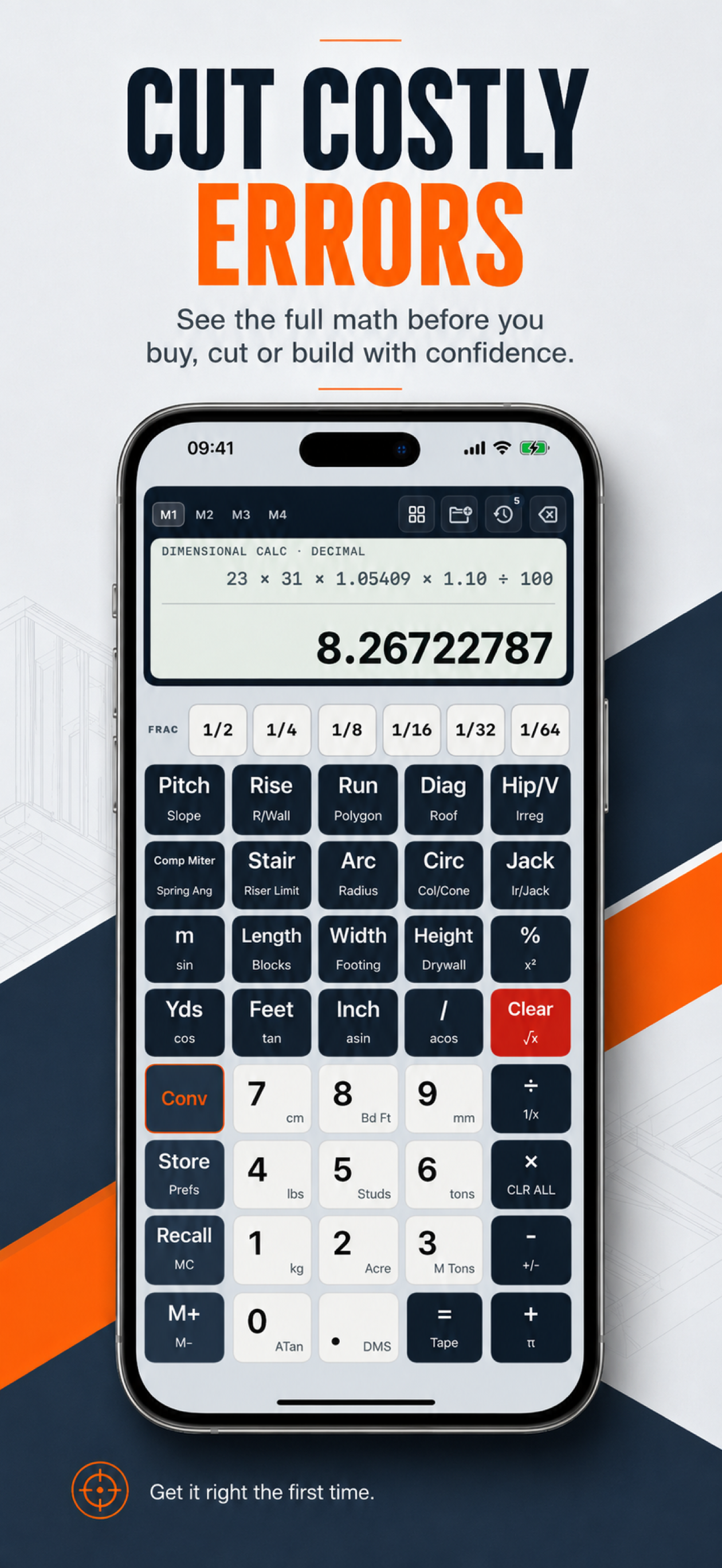
A handyman calculator is useful because small jobs cross many trades. The priority is not maximum formula count—it is quick unit-aware math, sensible material rounding, and a record of what was measured for each customer. Construction Pro is designed around that process with a five-column construction keypad, specialty calculators, selectable fraction precision, a paperless history tape, project folders, and Job Site Mode for brighter conditions.
A step-by-step method
- Define the output. Write down whether you need a length, area, volume, angle, spacing, or whole-material count.
- Measure and label every input. Distinguish feet, inches, decimal feet, and metric values. Use finished dimensions when the finished condition controls the work.
- Choose the matching calculator. Use the core keypad for measurement arithmetic and a specialty tool when geometry or material coverage has multiple inputs.
- Review the complete expression. Check signs, units, pitch convention, half-span versus full span, and whether waste is already included.
- Make the answer actionable. Convert it to a tape mark, cut angle, whole bag, sheet, bundle, or saved project note.
- Verify independently. Compare against a rough estimate, known formula, second measurement, or qualified plan before committing materials.
Worked field example
For a backsplash, calculate gross area, subtract only major openings, then add waste based on tile pattern and cuts before converting to whole cartons.
The example is a workflow illustration. Actual dimensions, product coverage, code limits, tolerances, and site conditions control the final decision. Keep supplier data and local requirements with the saved calculation.
Common mistakes to avoid
Applying one waste percentage to every material; relying on room names instead of measured dimensions; mixing customer notes with unverified calculations.
A calculator can process the values entered, but it cannot know whether a tape slipped, the wrong roof plane was measured, a finish layer was omitted, or a drawing revision changed the work. The final field check remains essential.
When a mobile construction calculator helps
A mobile tool is especially helpful when you repeatedly switch between feet-inch-fraction arithmetic, roof and stair geometry, material takeoffs, and saved notes. It keeps familiar calculations on the device already carried to the site and makes it easier to preserve the expression behind a result.
Use technology from a safe position. Do not operate a phone while climbing, driving, handling a running tool, or working where attention must remain on fall, electrical, traffic, or equipment hazards. For structural, code, or permit decisions, follow approved documents and consult the responsible local professional.